
LITTLE-TRIP CITY GUIDE
Gyeongju travel guide: from the historic centre to Bulguksa Temple
A slow visit to central Gyeongju is a different undertaking from travelling to its hills, lake, villages and coast. Start with the places you want around Cheomseongdae, then add an outer area for a clear reason. The ideas below are little trip suggestions, not an official tour reproduced as a confirmed itinerary.
Give the historic centre a clear theme
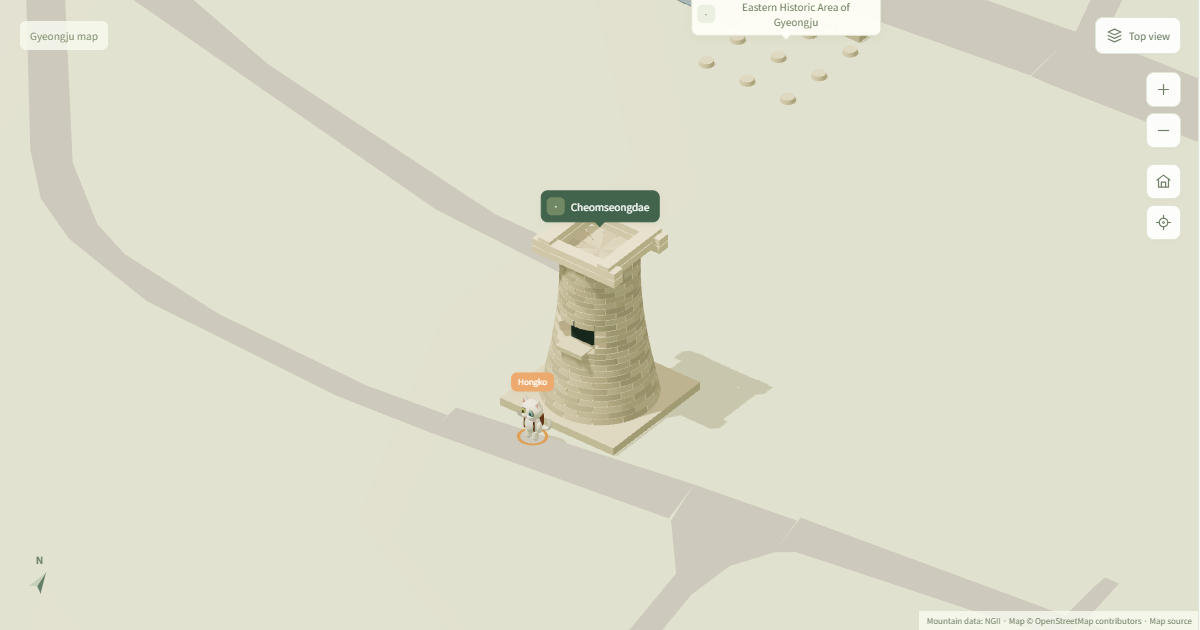
The city’s official central course introduces Gyeongju National Museum, Woljeonggyo Bridge, Cheomseongdae, Daereungwon and Donggung Palace and Wolji Pond together. You do not have to visit them all. Choose the scene that most interests you: the observatory’s stone structure, the rounded burial mounds, or the palace and pond.
Even within this central area, walking inside each site adds to the journey between map points. Allow separately for entry, looking around and breaks. If you want a meal on Hwangnidan-gil, choose the restaurant yourself and check its actual connection to the attractions before and after it.
Choose a reason for travelling beyond the centre
Bulguksa and Seokguram lie toward Tohamsan, Bomun Lake is east of the centre, Yangdong Village is to the north, and Gampo and the Tomb of King Munmu are on the eastern coast. Sharing a miniature view does not make them neighbouring streets. Pick a focus such as temple architecture, a lake break, village heritage or the sea, and allow a separate journey.
Bulguksa and Seokguram are introduced together as World Heritage, but they have distinct entrances and are separate visits. Do not treat them as one admission or a brief internal transfer. Without a car, check access to stops, connections and the return services. Your arrival and departure railway station or bus terminal also needs its own place in the schedule.
A central day and an outer-area day
For a short visit, make Cheomseongdae or Daereungwon the daytime anchor and consider Donggung Palace and Wolji Pond as an extra. If you want an evening view, check the admission cutoff and the journey home first. Do not assume that every daytime stop and an evening visit will fit simply because you have selected them.
With more time, begin by separating a central day from an outing to Bulguksa and Seokguram. Decide whether to add Bomun or the coast after comparing your accommodation, the real journeys and the time remaining. Flowers and autumn colours depend on your visit date; the suggested day is not a guarantee of a seasonal display.
Plan a question and a break for children
Give each stop one question: how are the stones stacked at Cheomseongdae, or how do the burial mounds compare in size? If you add a museum, narrow down the exhibition you want to see and connect it to the outdoor visit. These are suggested observation activities, not promises of a staffed programme or certified age suitability.
A large burial ground, temple steps and a Namsan trail involve different walking conditions. A trip with children should not treat all three as the same easy stroll. Check the walking sections and places to rest. If hiking is not the purpose of the day, choose a specific visit point rather than adding an entire mountain to a spare slot.
Check the end of the day and the parked car
An evening-view candidate expresses an interest in the scene after dark; it does not guarantee night access. Check operating and ticket notices for facilities such as Donggung Palace and Wolji Pond. Leave room between dinner and the last transport you intend to use. Choose restaurants and accommodation yourself, considering whether the stay is central or farther out.
After walking between several sites, you still need to return to the car before the next drive. The miniature and Hongko’s walk are different from real scale and on-site navigation. Check parking locations and entrances, and do not read an unconfirmed journey as a fixed travel time. Add festivals after reviewing the event information returned for your dates.
Places to compare on the map
- Cheomseongdae Observatory
A possible anchor for central heritage; look at its stone structure and setting.
- Daereungwon Tomb Complex
Separate outdoor mound viewing from the entry conditions of individual facilities.
- Donggung Palace and Wolji Pond
A palace and pond visit; check last admission before planning an evening stop.
- Bulguksa Temple
Allow a journey beyond the centre and decide separately whether to visit Seokguram.
Sources and further reading
Sources checked: 2026-10-01